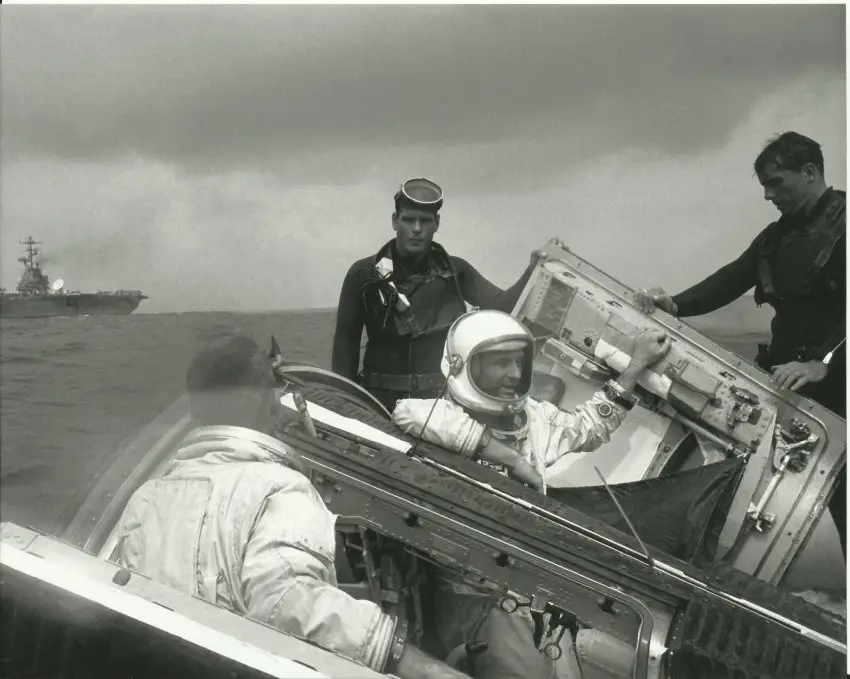
Recovered by USS Hornet in 1966
NASA’s Command Modules (CM) were built by Rockwell of North American Corporation, California.
This spacecraft was built in the Block I design and used for testing purposes. The Block 1 Command Module was designed before the plan for Lunar Orbit Rendezvous was chosen by NASA. Therefore, first CMs were only designed for Earth orbit. They lacked in-space docking capability, a pressurized crew-transfer tunnel, nor the ability to even carry a crew (no couches). Those features were added to the next Command Module design, Block II. This version had the ability to connect to the Lunar Excursion Module (LEM) to allow two astronauts to travel to the lunar surface and return to the Command Module, which remained in lunar orbit.
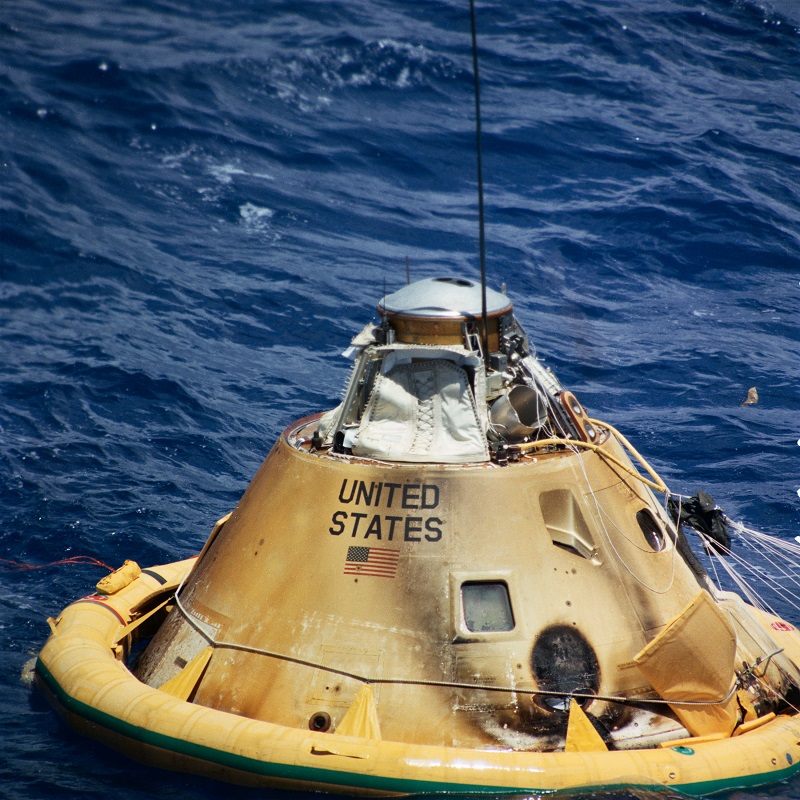
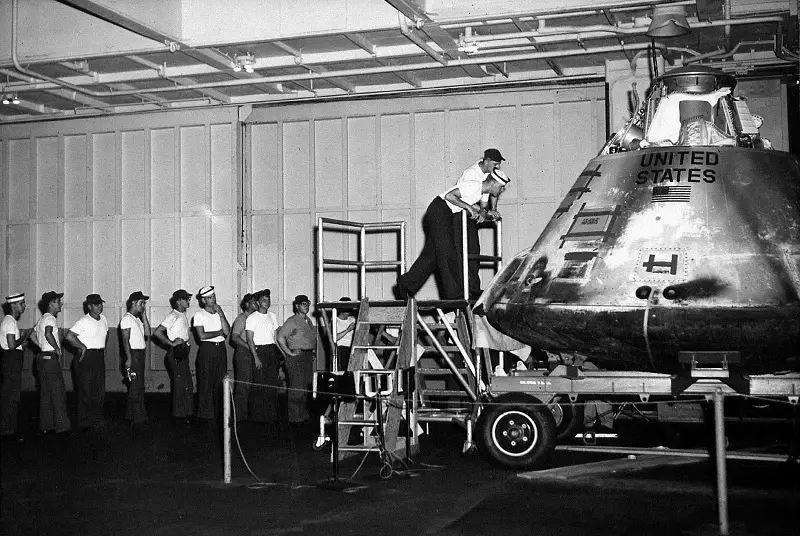
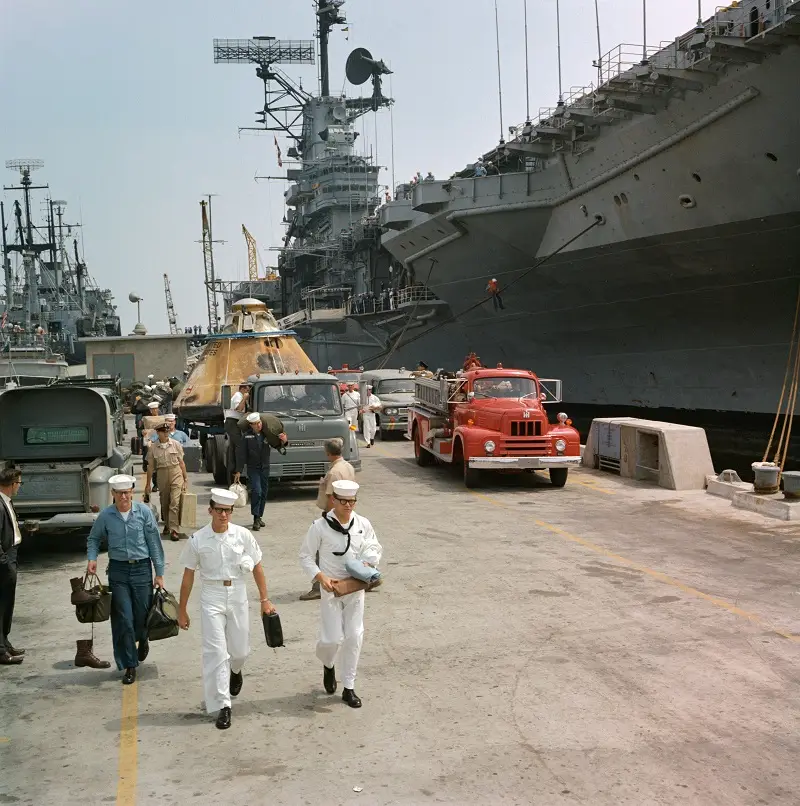
CM-011 was used for the AS-202 suborbital mission that NASA launched on August 25, 1966. The spacecraft splashed down southeast of Wake Island in the Pacific Ocean, 1 hour and 33 minutes after liftoff. Landing 240 miles short of the target point, it took USS Hornet (CVS-12) about 8 hours to reach and recover CM-011 during a summer NROTC cruise.
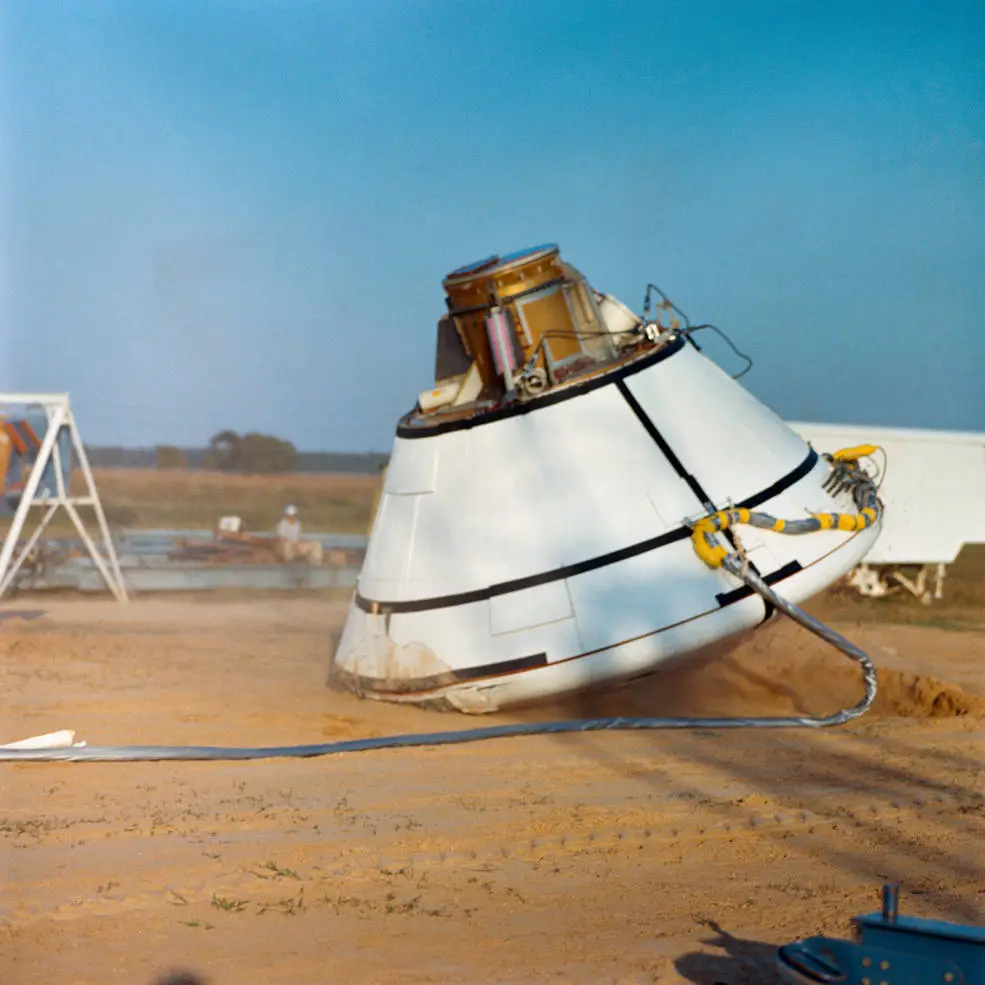
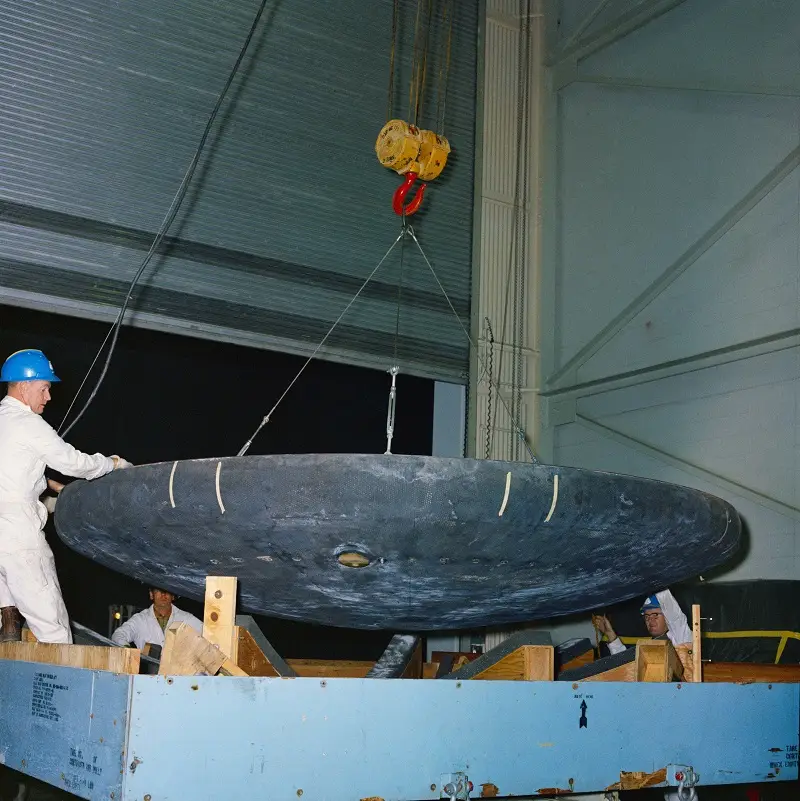
Following the mission, engineers from NASA and Rockwell/North American conducted a land impact test, dropping the spacecraft from a platform. This tested the structural integrity of the spacecraft and heat shield after it had gone through the cold vacuum of space and the enormous heat of reentry. On this test, the capsule was dropped from a 50-foot-high tower at a 23-degree angle, resulting in a crack in its base that can still be seen today.
On loan from the Smithsonian’s National Air and Space Museum
Additional Photos
- CM-011 in the Pacific Ocean waiting to be hoisted by B&A crane
- Hornet ’s crew and NROTC personnel examine CM-011 in the hangar bay
- NASA and Rockwell perform the CM-011 drop test
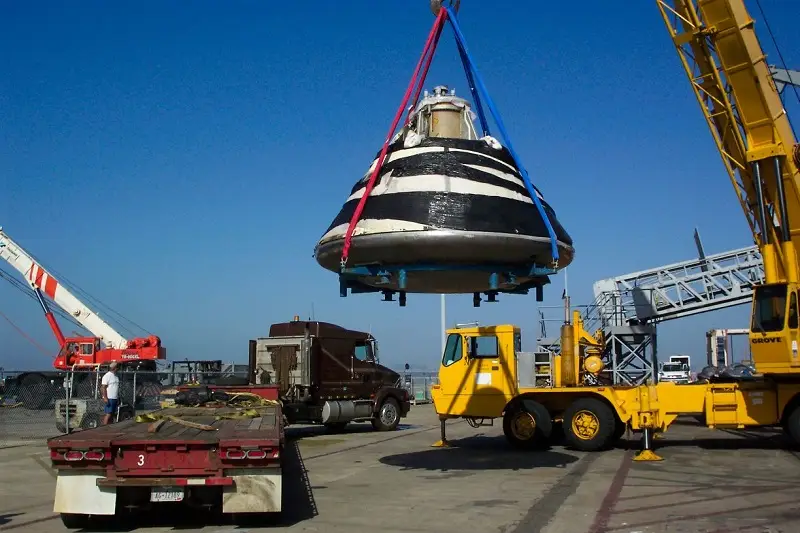
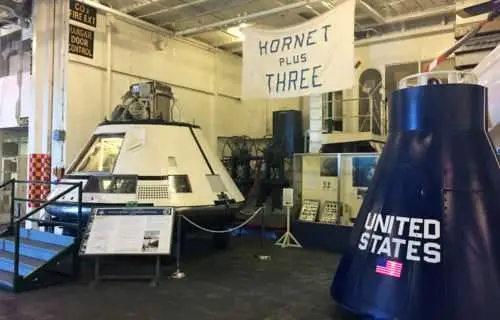
- CM-011 arrival on USSHM August 2004
- CM-011 heat shield after it was removed so it could be tested in the lab
- Hornet offload of CM-011