

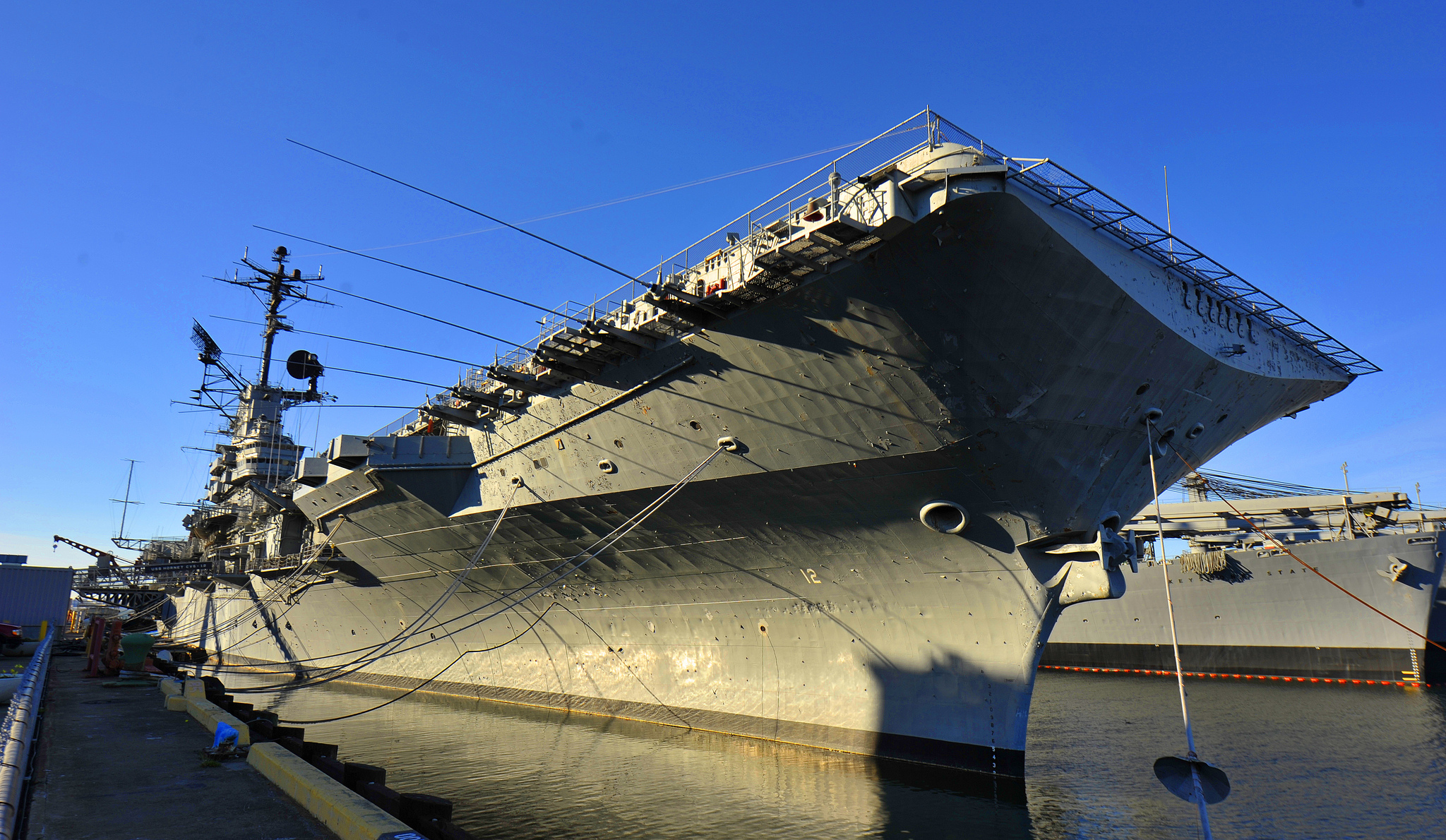
The History of USS Hornet
The might of an aircraft carrier lies in its ability to quickly move about the world’s oceans, projecting power whenever and wherever it is needed. The heart of a carrier’s combat strength is its aircraft; her Air Groups provided Hornet’s lethal sting. Hornet’s success was dependent on the capabilities of highly trained pilots and aircrews and the specialized aircraft that operated from her flight deck.
In World War II, her air groups consisted of a fighter (VF) squadron, a bombing (VB) squadron and a torpedo (VT) squadron. During the 1950s as naval warfare technology evolved, so too did the complexity and specialty of carrier-based aircraft. Joining the classic fighter and attack aircraft were electronic/early warning, photo-reconnaissance, and anti-submarine warfare aircraft. Dual-role aircraft also provided aerial tanking and limited cargo capabilities and helicopters proved essential to carrier operations which included search and rescue missions.
World War II Combat Record Awards

USS Hornet (CV-12) was awarded nine Battle Stars for Pacific service in World War II:
- One Star — Asiatic-Pacific Raids – 1944
- One Star — Hollandia Operation – 1944
- One Star — Marianas Operation – 1944
- One Star — Western Caroline Islands Operation – 1944
- One Star — Western New Guinea Operation – 1944
- One Star — Leyte Operation – 1944
- One Star — Luzon Operation – 1944-1945
- One Star — Iwo Jima Operation – 1945
- One Star — Okinawa Gunto Operation – 1945

USS Hornet (CV-12) was awarded a Presidential Unit Citation for the following operations:
- Air Group 2 (VF-2, VB-2, VT-2, and part of VFN-76)
- March 29 – May 1, 1944 — Palau, Hollandia, Truk.
- June 11 – August 5, 1944 — Marianas, Bonins, Yap.
- September 6 – September 24, 1944 — Philippines, Palau.
- Air Group 11 (VF-11, VB-11, and VT-11)
- October 10 – Nov. 22, 1944 — Ryukyus, Formosa, Philippines, Luzon.
- December 14 – Dec. 16, 1944 — Luzon.
- January 3 – January 22, 1945 — Philippines, Formosa, China Sea, Ryukyus.
- Air Group 17 (VF-17, VBF-17, VB-17, and VT-17)
- February 16 – June 10, 1945 — Japan, Bonins, Ryukyus.
World War II Combat Record Statistics
In 18 months of combat operations, USS Hornet CV-12 achieved the following combat record:
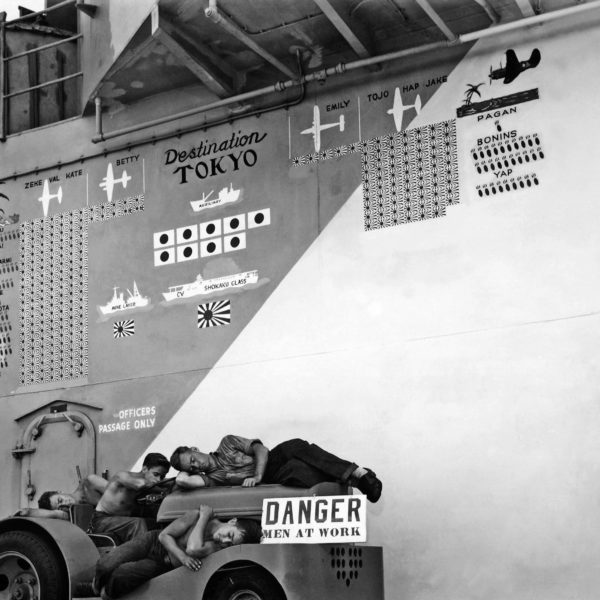
- 668 Japanese planes shot down
- 742 Japanese planes destroyed on the ground
- 1,269,710 tons of enemy ships sunk or heavily damaged: 73 ships sunk, 37 probable, 413 damaged
- Ship’s engines burned 28,437,630 gallons of fuel oil
- Ship’s evaporators distilled 41,231,453 gallons of fresh water
- Ship steamed 155,000 miles (equal to six trips around world)
Air Wings:
- Aircraft burned 5,644,800 gallons of aviation gasoline
- Aircraft fired 4,878,748 rounds of machine gun bullets
- Aircraft delivered 17,793 bombs, 5,842 rockets, and 116 torpedoes
- Aircraft flew 18,569 combat sorties
- Aircraft logged over 23,000 arrested landings
Ship’s Guns:
- Fired 7,275 rounds of 5″ ammo
- Fired 115,179 rounds of 40 mm ammo
- Fired 409,580 rounds of 20 mm ammo
1 carrier sunk, 1 cruiser sunk, 10 destroyers sunk, 42 cargo ships sunk, and assisted in the sinking of the IJN super battleship Yamato.
World War II Statistics
USS Hornet CV-8
- Displacement (standard) – 19,800 tons
- Displacement (full load) – 25,500 tons
- Deck length – 824 feet (251 m)
- Deck width – 114 feet (34 m)
- Draft – 24 feet (7 m)
USS Hornet CV-12
- Displacement (standard) – 27,100 tons
- Displacement (full load) – 36,380 tons
- Length – 872 feet (266 m)
- Width – Flight Deck 147 feet (45 m) Waterline Beam 93 feet (28 m)
- Draft – 28 feet (8 m)
USS Hornet CV-8 was a Yorktown-class aircraft carrier. She launched the famed Doolittle Raid on Tokyo in 1942 in response to the Japanese attack on Pearl Harbor.
USS Hornet CV-12 is one of the 24 legendary Essex-class aircraft carriers constructed during and after World War II. Built at Newport News, Virginia, she is the eighth ship to be named “Hornet.” She is one of the most decorated ships of the US Navy, having rounded out her service as the prime recovery ship for Apollo 11 and 12, the historic first manned lunar landing missions.
For 16 continuous months Hornet was in action in the forward areas of the Pacific combat zone, sometimes within 40 miles of the Japanese home islands.
- Under air attack 59 times, she was never seriously damaged.
- Her aircraft destroyed 1,410 Japanese aircraft, only Essex exceeded this record.
- Her air groups destroyed or damaged 1,269,710 tons of enemy shipping.
- 72 enemy aircraft shot down in one day during the famous “Great Marianas Turkey Shoot.”
- 10 Hornet pilots attained “Ace in a Day” status.
- 255 aircraft shot down in a month.
- 30 of 42 VF-2 Hellcat pilots were aces.
- Supported nearly every Pacific amphibious landing after March 1944.
- Scored the critical first hits in sinking the super battleship Yamato.
- Launched the first carrier aircraft strikes in support of the liberation of the Philippine Islands.
- In 1945 launched the first strikes against Tokyo since the 1942 Doolittle Raid.
General Ship Statistics, Dimensions, & Specifications
LENGTH, overall:
1943: 876 feet
1956: 893 feet
BEAM, extreme width:
1943: 147 feet
1956: 192 feet
DRAFT (under load): 29 feet
DISPLACEMENT, Standard:
1943: 27,100 tons
1953: 33,100 tons
DISPLACEMENT, Full Load:
1943: 33,900 tons
1956: 40,300 tons
HEIGHT ABOVE WATERLINE (top of mast): 190 feet
KEEL TO TOP OF MAST: 229 feet
COST (Original): $69 million
Engineering Plant and Mechanical
ENGINES: 4 Westinghouse Geared Turbine Engines
BOILERS: 8 Babcock & Wilcox M-Type
PROPELLERS: 4 four-bladed propellers of solid manganese bronze; 15 foot diameter, 27,190 lbs each
LENGTH OF SHAFTS:
No. 1 and 4: 258 feet
No. 2 and 3: 186 feet
SHAFT DIAMETER: 2 feet
PROPULSION: 150,000 horsepower
RUDDER: 430 sq. ft. in surface area
ANCHOR CHAINS: 2 chains — 1,100 feet long, 108,000 lbs
USS HORNET CV-12 Specifications
KEEL LAID: 3 August 1942
LAUNCHED: 30 August 1943
COMMISSIONED:
CV-12: 29 November 1943
CVA-12: 11 September 1953
CVS-12: 18 December 1958
DECOMMISSIONED (Final): 26 June 1970
CREW COMPLEMENT:
WWII: 3,600 – 4,000 including Air Wing
Post-WWII: 3,000 – 3,500 including Air Wing
NUMBER OF AIRCRAFT:
WWII: 92 – 101
1953 – 1958: 86
1958 – 1970: 44
Armament
WWII:
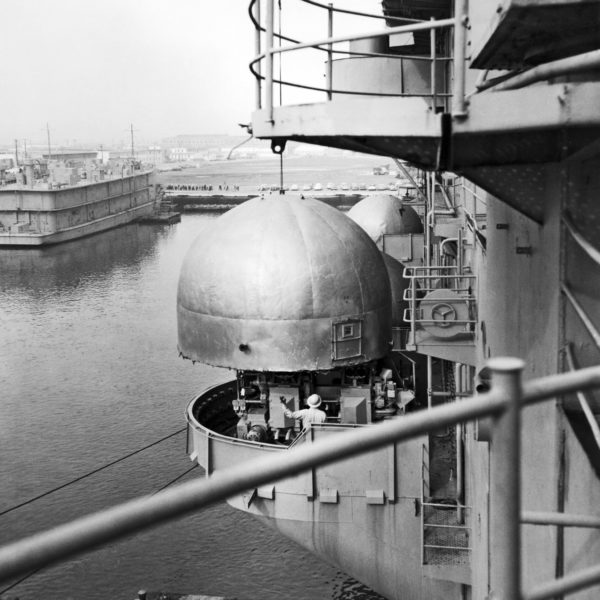
(12) 5-in. 38-cal. (4 twin mounts, 4 single)
(10) 40 mm quad mounts
(59) 20 mm single mounts
1953:
(8) 5-in. 38-cal. single mounts
(14) 3-in. 50-cal. twin mounts
1956:
(7) 5-in. 38-cal. single mounts
(4) 3-in. 50-cal. twin mounts
1965:
(4) 5-in. 38-cal. single mounts
The Legacy of Ships Named Hornet
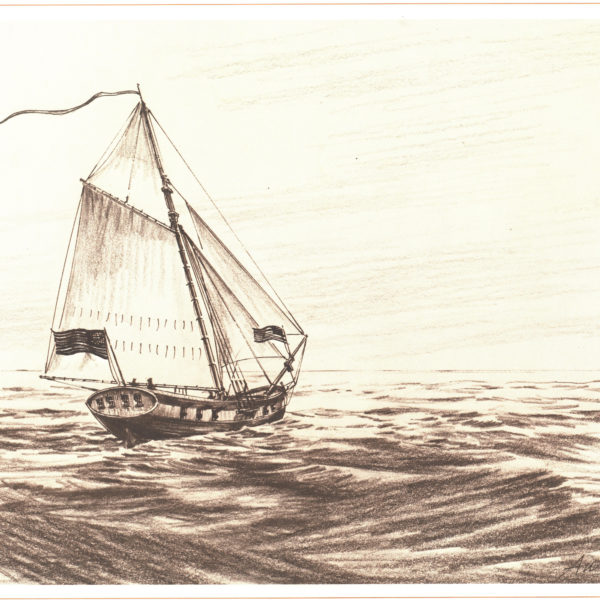
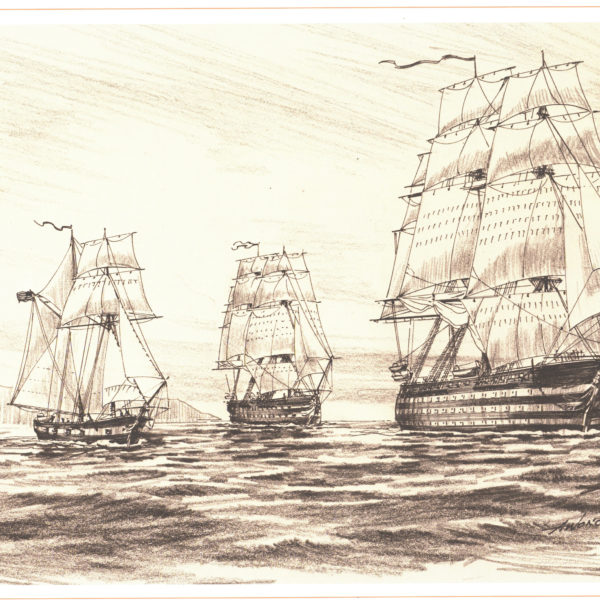
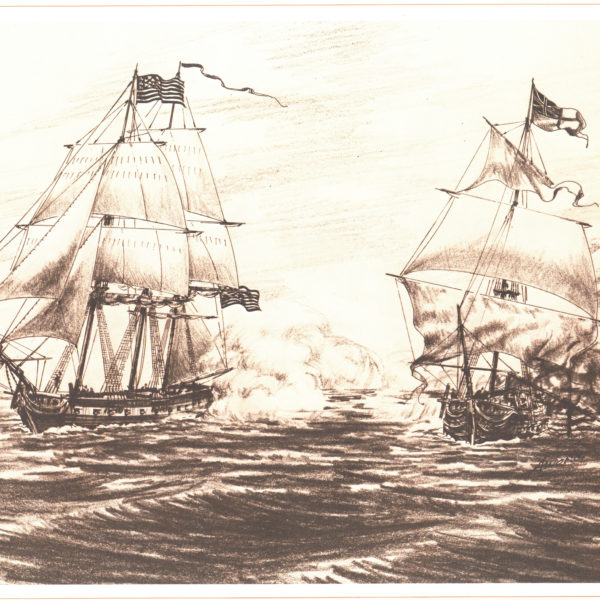
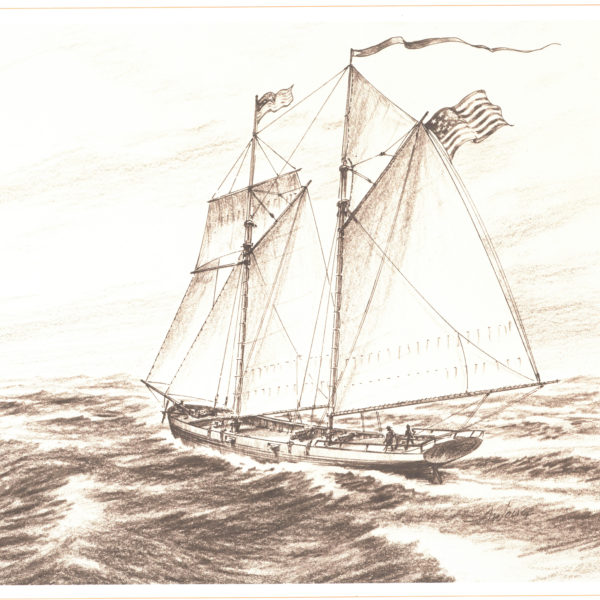
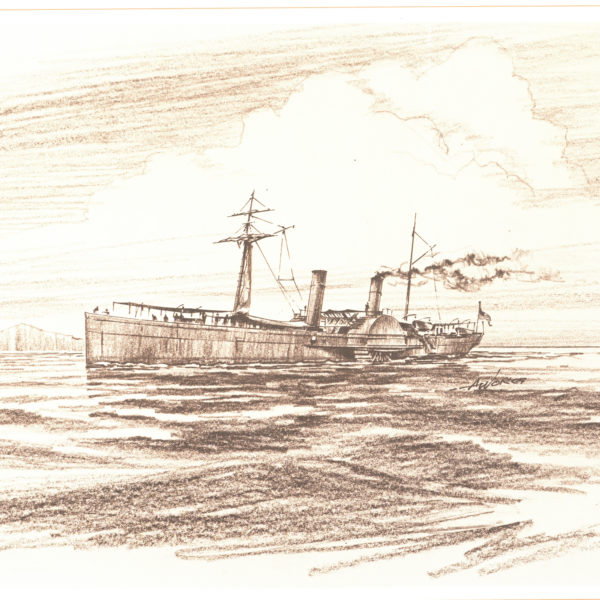
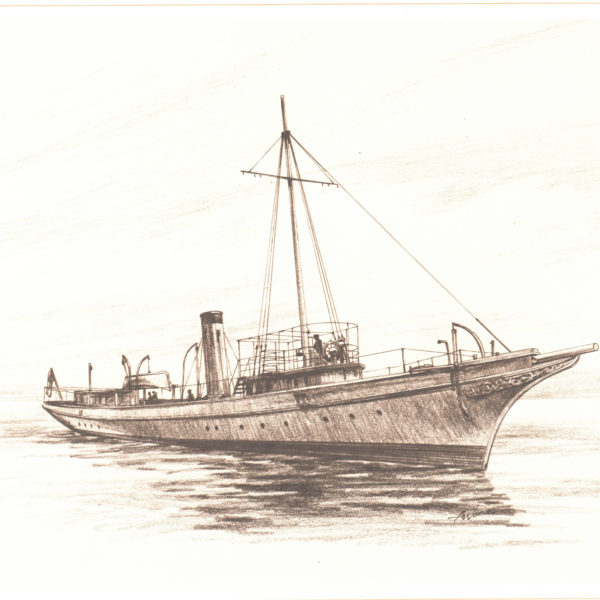
1775
1805
1805-1829
1813-1829
1864
1898
1941
1943-1970
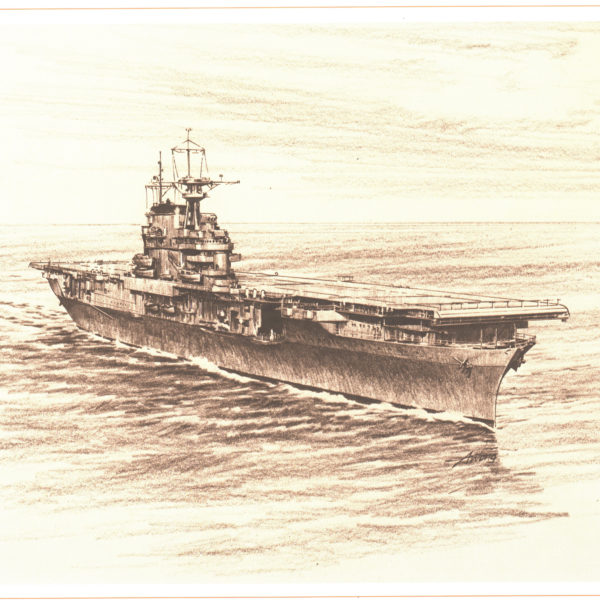
The eighth Hornet was an Essex-class aircraft carrier. USS Hornet (CV-12) was commissioned in November 1943.
She entered the Pacific War in March 1944 and was part of the famous US Navy Fast Carrier Task Forces that pounded enemy installations in the western Pacific supported numerous island invasions. She was awarded 11 battle stars for her exemplary WWII service. She also served three tours of duty in the Vietnam War and recovered the Apollo 11 and Apollo 12 lunar landing spaceflights in 1969.
CV-12: The Grey Ghost Enters the War
1943
January
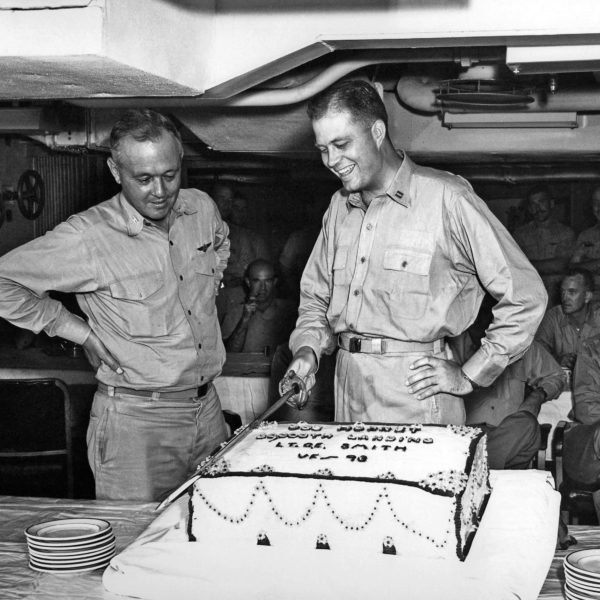
The Navy’s aircraft carrier hull number 12 was originally slated to be commissioned as the USS Kearsarge. However, the ship’s name was changed to honor the fallen USS Hornet (CV-8) after she was sunk at the Battle of Santa Cruz Islands while protecting US forces holding Guadalcanal. USS Hornet (CV-12) was commissioned November 29, 1943, becoming the eighth ship to bear the name.
1944
March 15
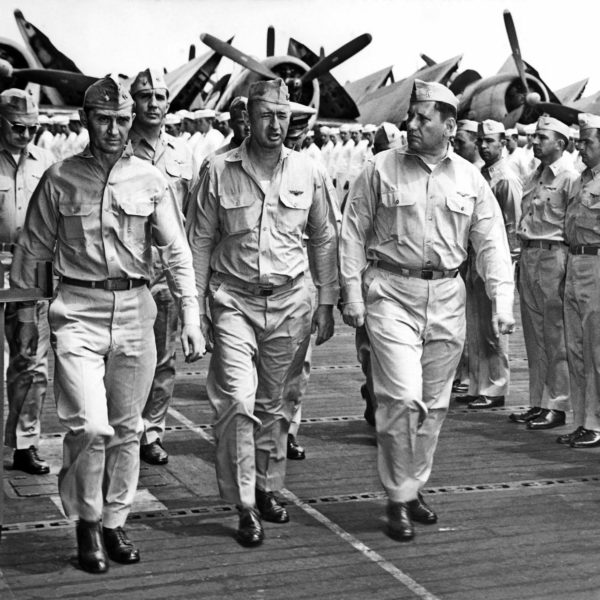
USS Hornet left Pearl Harbor en route to the forward area. Her combat debut as the flagship of Rear Admiral J.J. “Jocko” Clark came quickly as she joined famed Task Force 58.
USS Hornet (CV-12) was commissioned November 29, 1943, becoming the eighth ship to bear the name.
June 19
Battle of the Philippine Sea where pilots from Hornet and other carriers destroyed enemy aircraft with minimal losses in what came to be known as the “Great Marianas Turkey Shoot”.
June 24th
Hornet participated in the Western Carolina Islands operation with air support strikes on Peleliu.
September
Hornet air group VF-2 had the distinction of being the top fighter squadron in the Pacific with more total victories and more “ace” pilots then any other fighter squadron up to that time.
October 23-26
Hornet participated in the Battle of Leyte Gulf, launching 2 long-range strikes against a rapidly retiring Japanese fleet and scoring hits on several capital ships.
November
Hornet and Task Force 58 began intensive operations in the Philippines and surrounding areas. For the next two months, strikes were made against positions on Formosa, Luzon, Saigon, Cam Ranh Bay in French Indo-China, and Hong Kong.
1945
February 16
Hornet kept a date the old Hornet (CV-8) had made some 34 months before when she conducted the first carrier strikes on Tokyo, neutralizing air fields and hitting shipping and targets of opportunity.
June 5
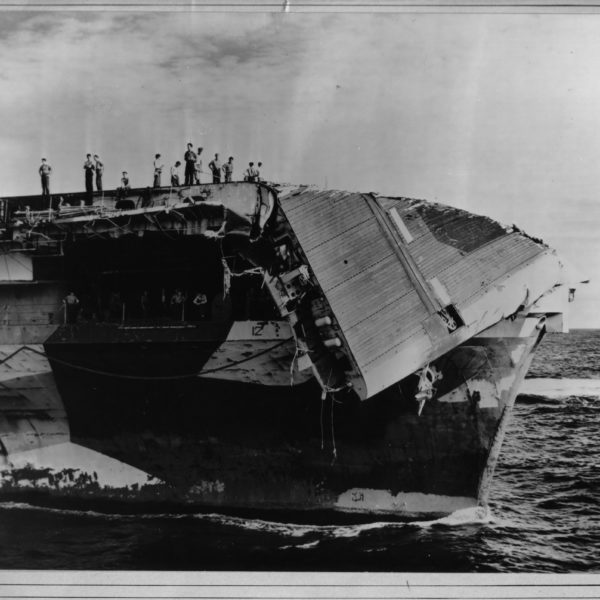
The carrier and crew weathered a severe typhoon that threw 120-knot winds at the warship. The flight deck of the Hornet and her sister ship Bennington(CV-20) were heavily damaged and both were put out of action.
July 7
Hornet steamed through the Golden Gate. She offloaded planes and ammunition then entered dry dock at Hunters Point Naval shipyard for repairs from the typhoon.
September
After Japan surrendered, Hornet was used as a troop transport in Operation “Magic Carpet,” bringing veterans of the Pacific back to the West Coast.
1946
August 14
Hornet returned to San Francisco and was designated an inactive part of the 19th Pacific Fleet.
1947
January 15
Hornet is decommissioned at Hunters Point, San Francisco.
1951
March 20
Hornet was recommissioned at Hunters Point after 4 ½ years. The carrier departed San Francisco and transited the Panama Canal en route to Brooklyn Naval Shipyard in New York.
May 12
Underwent modernization renovation in New York. Hornet’s 27-month, $50 million renovation, known as SCB-27A, gave her more powerful catapults and arresting gear, a strengthened flight deck, a new streamlined island, new ammunition lifts and numerous other improvements to facilitate the Navy’s new jets and heavy attack bombers. This program upgraded virtually every system aboard the ship and brought her to the forefront of carrier technology.
1952
October 10
HORNET received the new designation “CVA” for attack carrier.
1953
September 11
Hornet was recommissioned at New York Naval Shipyard.
December 8
During sea trials, Hornet landed its first jet, an F2H-3 Banshee.
1954
May 11
Since Hornet was based on the West Coast, the Navy returned it to California on an around-the-world cruise, via the Atlantic, Mediterranean, and Indian Oceans. The cruise lasted eight-months and ended in Manila Bay in late June when Hornet joined the Pacific Fleet.
July 25
Hornet fighters assisted in a search for survivors of a British Cathay Pacific DC-4 commercial airliner that had been shot down by two Chinese La-7 Fins fighters. The British airliner had crashed off the Chinese island of Hainan and Hornet pilots were able to locate several survivors in what became known as the “Hainan Incident.”
1955
During this year, the Hornet conducted operations and training in the Pacific.
1956
January
Hornet was ordered to Bremerton, Washington to start her next modernization, called SCB-125 by the Navy. While at Puget Sound Naval Ship Yard, Hornet was fitted with an angled flight deck.
June
Chinese anti-aircraft gunners shot at two of Hornet’s aircraft but, other than minor damage, both aircraft returned to Hornet safely.
July
Hornet returned to San Diego and spent the rest of the year conducting training around the California coast before heading to the western Pacific.
August
Modernization was completed and also included the fitting of an enclosed hurricane bow. Following tests, training, and carrier qualifications, Hornet departed for a six-month deployment with the 7th Fleet in the western Pacific.
1958
January
Hornet left for another Western Pacific cruise.
June 27
Hornet was re-designated an “anti-submarine warfare support” (ASW) aircraft carrier, CVS-12. Her CVS conversion was done at Puget Sound Naval Shipyard.
1959
April
Hornet departed for the Western Pacific in her new role as an ASW carrier. As an ASW carrier, one of the more noticeable changes was the addition of helicopters and piston-engine aircraft.
1960
March
Hornet returned to Long Beach and started another WestPac Cruise.
1961
February
Returning to Bremerton, Hornet was dry docked for four months.
November
Hornet crewmen helped fight the famous Hollywood Hills fire that devastated the Los Angeles suburb. Hornet’s two diesel generators were used to feed electricity into the Southern California power grid.
1962
June
Hornet started her seventh WestPac Cruise and returned to Long Beach at the end of the year where four of the remaining 5-inch guns were removed.
1963
April
Hornet returned to Hunter’s Point to undergo another modernization and conversion called FRAM II.
October
Hornet departed for her eighth WestPac Cruise.
1965
February
The conversion to FRAM II modernization was complete.
August
Hornet departed for her ninth WestPac Cruise and first Vietnam cruise. Most of her time was spent supporting Navy and Marine aircraft on an around-the-clock SAR (search and rescue) mission. Her helicopters flew inland in support of strike aircraft while her assigned A-4E Skyhawks flew 110 combat missions off another carrier.
1966
March
Hornet arrived back in San Diego and entered dry dock for overhaul.
August
Hornet served as the Prime Recovery Ship for Apollo AS-202’s suborbital space flight. The unmanned capsule was recovered 300 miles north of Wake Island.
1967
March
Hornet left for her tenth WestPac Cruise and second Vietnam cruise. During this time, Hornet supported Seventh Fleet units in and around Vietnam and the Gulf of Tonkin. Hornet tracked Soviet submarines and was over flown several times by Soviet aircraft.
October
After several trips to Japan and Hong Kong, Hornet returned to Long Beach.
November
Hornet entered dry dock in Long Beach in late November.
1968
May
Hornet leaves dry dock after a completed overhaul and departs for her eleventh WestPac and third Vietnam Cruise.
October
Arriving in the Gulf of Tonkin shortly after the bombing halt, Hornet pilots conducted surveillance and ASW operations before stopping at Hong Kong and Japan.
1969
April
Returns to San Diego after being stationed off Vietnam for most of the remainder of the cruise.
June
Hornet was selected by the Navy as the Prime Recovery Ship for the Apollo Program.
July
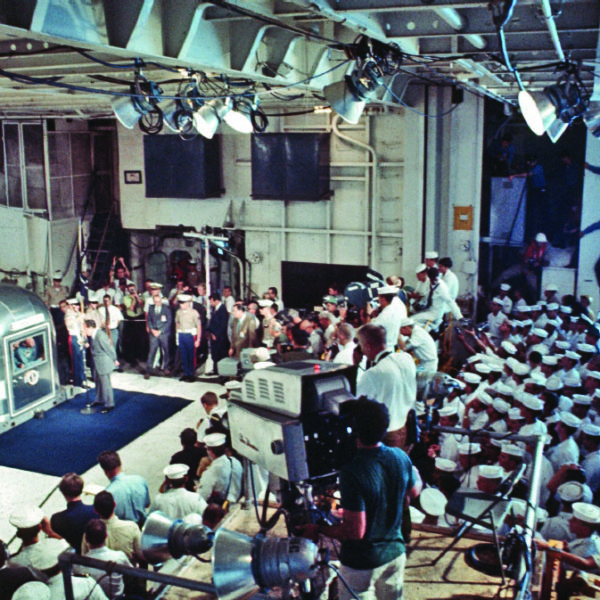
Departed Hawaii for primary Apollo 11 recovery area, and President Richard Nixon arrived on board to observe Apollo recovery mission.
July 24
Recovered the Apollo 11 astronauts, Buzz Aldrin, Neil Armstrong and Mike Collins.
Apollo Recovery Program
USS Hornet (CVS-12) was selected by the Navy as the Prime Recovery Ship (PRS) for Apollo 11, America’s first lunar landing mission. On July 24, 1969, President Richard Nixon, ADM John S. McCain (CINCPAC) and a number of other dignitaries were present while Hornet recovered astronauts Neil Armstrong, Buzz Aldrin and Michael Collins and their spacecraft Columbia. Armstrong and Aldrin were the first two humans to walk on the Moon.
The Navy units embarked on the USS Hornet that participated in the Apollo 11 recovery were: Helicopter Anti-submarine Warfare Squadron Four (HS-4) flying the Sikorsky SeaKing SH-3D helicopter; Underwater Demolition Teams Eleven and Twelve (UDT-11 and UDT-12); Airborne Early Warning Squadron VAW-111 flying the Grumman E-1B Tracer, and Fleet Logistics Support Squadron VR-30 flying the Grumman C-1A Trader.
The eight-day Apollo 11 mission marks the first time in mankind’s history that humans walked on the surface of another planetary body. On July 20, 1969, two astronauts, Mission Commander Neil Armstrong and LM pilot Edwin “Buzz” Aldrin Jr, landed on the Moon in the Lunar Module (LM) Eagle. During a historic 2 ½ hour lunar surface excursion, the astronauts set up scientific experiments, took photographs, and collected rock and soil samples. After the Eagle rendezvoused with the Command Service Module (CSM) Columbia, the astronauts returned to Earth, landing in the Pacific Ocean on July 24. Apollo 11 fulfilled President John F. Kennedy’s challenge for America to land a man on the Moon and return him safely to Earth before the 1960’s decade had ended.
Apollo 11 was launched on a Saturn V on July 16, 1969 from Kennedy Space Center in Florida. After 1 ½ Earth orbits, the S-IVB stage was re-ignited, putting the spacecraft on course for the Moon. The S-IVB was fired again once the CSM reached the Moon to insert the spacecraft into orbit around it. On July 20, Neil Armstrong and Buzz Aldrin entered the Lunar Module (LM) Eagle and descended to the lunar surface. The LM landed in the Sea of Tranquility with Armstrong reporting, “Houston, Tranquility Base here – the Eagle has landed.” Armstrong stepped onto the lunar surface several hours later stating, “That’s one small step for a man, one giant leap for mankind”.
Aldrin descended the ladder several minutes later. Both astronauts unveiled a plaque on the LM descent stage with the inscription: “Here Men From Planet Earth First Set Foot Upon the Moon, July 1969 A.D, We Came In Peace For All Mankind.” The astronauts deployed the scientific instruments, took photographs, and collected 22 kilograms of lunar rock and soil samples. The astronauts traversed a total distance of about 250 meters. The EVA ended after 2 hours, 31 minutes when the astronauts returned to the LM and closed the hatch.
After spending over 21 hours on the lunar surface, the Eagle blasted off. Once the LM had docked with Columbia, the two astronauts transferred to the CM, and the LM was jettisoned into lunar orbit (the crash site of the Eagle on the Moon is still unknown).
Three days later, just before Columbia was positioned for reentry into Earth’s atmosphere, it was separated from the Service Module. Apollo 11 splashed down in the Pacific Ocean on July 24 at 5:50 a.m. local time, after traveling over 950,000 miles in a little more than 8 days. The splashdown point was 920 miles southwest of Honolulu and 13 miles from the USS Hornet.
Four months later, the USS Hornet (CVS-12) repeated this flawless performance as PRS for the recovery of Apollo 12, America’s second lunar landing mission. On November 24, 1969, the spacecraft Yankee Clipper, with its all-Navy astronaut crew of Pete Conrad, Alan Bean and Dick Gordon, splashed down a little over 2 miles from the aircraft carrier.
August
Hornet returned to Long Beach with a banner proclaiming “HORNET PLUS THREE,” which declared them to be the recovery vessel for Apollo 11.
October
Departed Long Beach for Hawaii as primary recovery platform for Apollo 12 mission.
November
Departed Pearl Harbor for primary Apollo recovery area to pick up the spacecraft Yankee Clipper, with its all-Navy astronaut crew of Pete Conrad, Alan Bean and Dick Gordon, splashed down a little over 2 miles from the aircraft carrier.
December
Hornet returns to Long Beach, CA.
1970
January
The Navy announces CVS-12 will be deactivated in June.
February
An S-2E Tracker makes last arresting landing aboard Hornet.
March
Hornet begins deactivation at Long Beach, CA.
June
Hornet decommissioned at Puget Sound Naval Shipyard, Bremerton, WA.
1989
August
The Navy ordered Hornet stricken from the Naval register.
1991
December
Hornet designated a National Historic Landmark by National Park Service. She is listed on the National Register of Historic places, #91002065.
1998
May 26
Hornet was donated to the Aircraft Carrier Hornet Foundation.
October 17
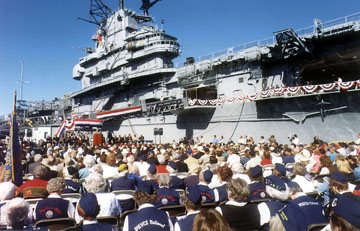
Hornet was opened to the public as the USS Hornet Museum.
1999
USS Hornet was designated as a California State Historic Landmark.